Forests cover approximately 480,000 ha in Rwanda, about 20% of the total land area. The vast majority of this is woodland (15%), while the rest is tropical moist forest (5%) and forest.
Forests are the habitat for wildlife; Rwanda is home to 96 mountain gorillas and other species of mammals along with 665 birds, 31 amphibians, 206 reptiles, and 2,288 species of plants.
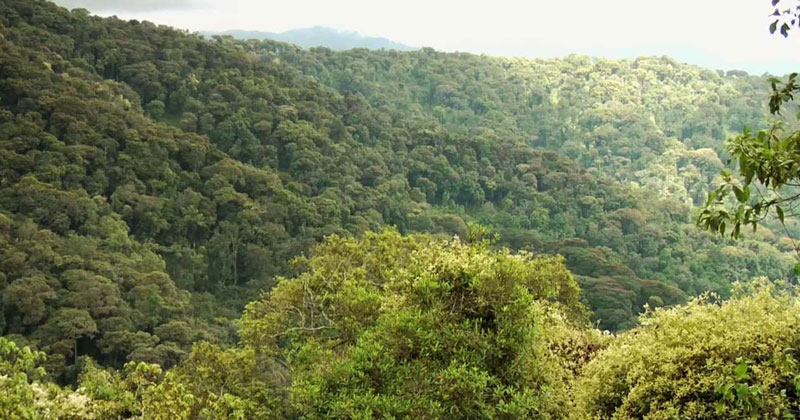
Nyungwe Forest
Nyungwe which is among the largest mountain rainforest in Africa covers an area of about 400 square miles. The forest is made includes rugged terrain and tall closed-canopy forest, bamboo thickets, and open flower-filled marshes. The forest was established as a forest reserve in 1933
The forest is home to at least 275 species of birds, 140 species of Orchids, 13 types of primates, and more than 400 endangered chimpanzees.
Nyungwe is an important water catchment for Rwanda and contains many natural resources on which Rwanda’s population depends.
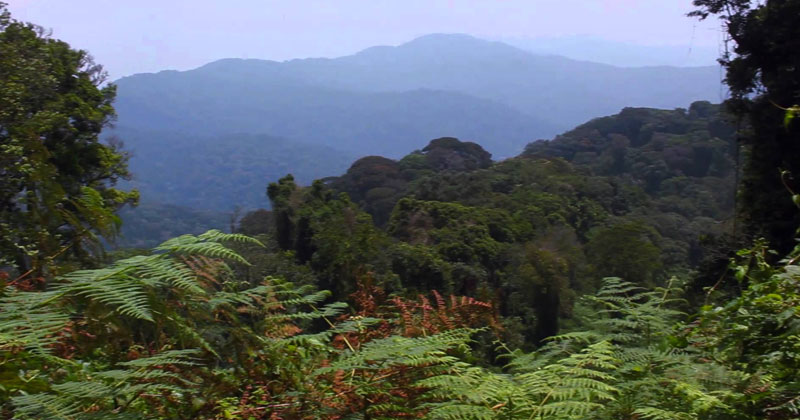
Important wildlife
It is a habitat of the following important wildlife;
- Owl faced monkeys
- Chimpanzee
- Black and white colobus monkeys
- Handsome white-bearded L’Hoest’s money
- Acrobatic Angola colobus
- Great blue turaco
- Crested bird
The tourist activities at the park.
The tourist activities of the park include the following;
- A good network of nature walking trails
- Bird and butterfly watching
- Walking trails for primate tracking
Gishwati National Forest Reserve.
The Gishwati Forest Reserve is a rainforest extending west beyond Lake Kivu connecting with the rainforests of Congo and south connecting with Nyungwe Forest. The 2012/2013 national budget contains the supplies to turn Gishwati into a full national park. The Gishwati rain forest is located on a 900 ha area of land. An additional 700 ha of agricultural fields and pastures land will soon be recognized to be within reserve boundaries.
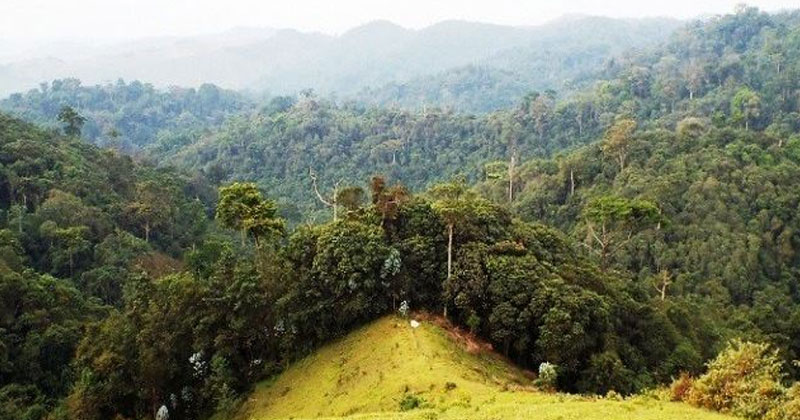
Flora
Gishwati Reserve has 58 Species of trees and shrubs which includes the following;
- Indigenous Hardwoods
- Macaranga Kilimandscharica
- Carapa Grandiflora
- Entandrophagrama Excelsum
- Symohonia Globulifera.
- Giant Tree Ferns
- Blue Lichen.
Fauna
The reserve is rich in animals including the following;
- Eastern Chimpanzee (Pan-troglodytes schweinfurtii)
- Golden monkey
- Blue monkey
- L’Hoest’s monkey known as mountain monkey.
- Black and white colobus.
- Red river hog (Potamochoerus porcus), the
- Black front duiker (Cephalophus nigrifrons)
- Southern tree hyrax (Dendrohyrax arboreus)
- Woodhoopoes (Phoeniculidae)
- White-headed Woodhoopoe (Phoeniculus bollei)
- Old World Warblers (Sylviidae)
- Mountain Yellow Warbler (Chloropeta similis).
Gishwati Forest Reserve is going through restoration efforts supported by Great Ape Trust expected to create a 50km forest corridor to connect the chimpanzees to Nyungwe National Park to protect 15 chimpanzees that are on the brink of extinction.
The tourist activities
The tourist activities in the reserve include the following;
- Bird watching
- Hiking the Congo Nile Trail
- Chimpanzee Tracking
- Butterfly watching
Mukura Forest
Mukura Forest is a protected reserve in the North-West part of Rwanda covering about 1,200 square km a great natural resource for the Great Lakes region and the international community.
Mukura Forest used to be attached to Gishwati and Nyungwe before agents of deforestations came in. Mukura Forest reserve was created in 1951 with an area of 3, 000 ha. Today about 50% of the forest’s area has been lost due to deforestation and only about 1,600 ha of the original forest remains. This has resulted with high loss of biodiversity.
The forest is mainly covered by Softwood plantation like Pinus spp, Cupressus spp and Callitris spp.
Wildlife Species in Mukura Forest
It is home of over 402 species of mammal species over 1,061 species of birds, over 293 species of reptiles and amphibians and over 5, 793 species higher plants .
Reforestation efforts
In order to restore the forest, the following is going on:
- Governments protection of the forest is through provision of Forest guards, capacity building and creates a wide range public awareness on the advantages of forests.
- Rwanda has made forestry one of the pillars of national economy playing a role in supporting Agriculture, Tourism, Environmental stability and Energy.
- The government has set its target of 30% green coverage by the year 2020 planting
- Involving local communities in the conservation of the Mukura forest reserve including the protection activities of the forest
- Increasing income generating activities outside the forest to motivate local communities for the conservation of the forest
- Creating local cooperatives to facilitate income generating activities
- Involving more women and the youth for the conservation and the development of the forest